The world of gaming has evolved, but 1080p gaming remains a sweet spot for many players seeking rich visuals without breaking the bank. If you want to squeeze the most performance from your rig while keeping costs in check, follow this step‑by‑step upgrade roadmap that balances CPU, GPU, memory, storage, and cooling to keep every frame smooth.
Evaluate Your Current Setup
Know where you stand before you start buying parts. Open your Task Manager or use a benchmarking tool like Geekbench to capture baseline CPU, GPU, and memory usage percentages during a modern title such as Fortnite or Cyberpunk 2077. Pay close attention to GPU bottlenecks: if your card stays below 60 % of its maximum while the CPU maxes out, that tells you the GPU may be your limiting factor for 1080p gaming at higher settings.
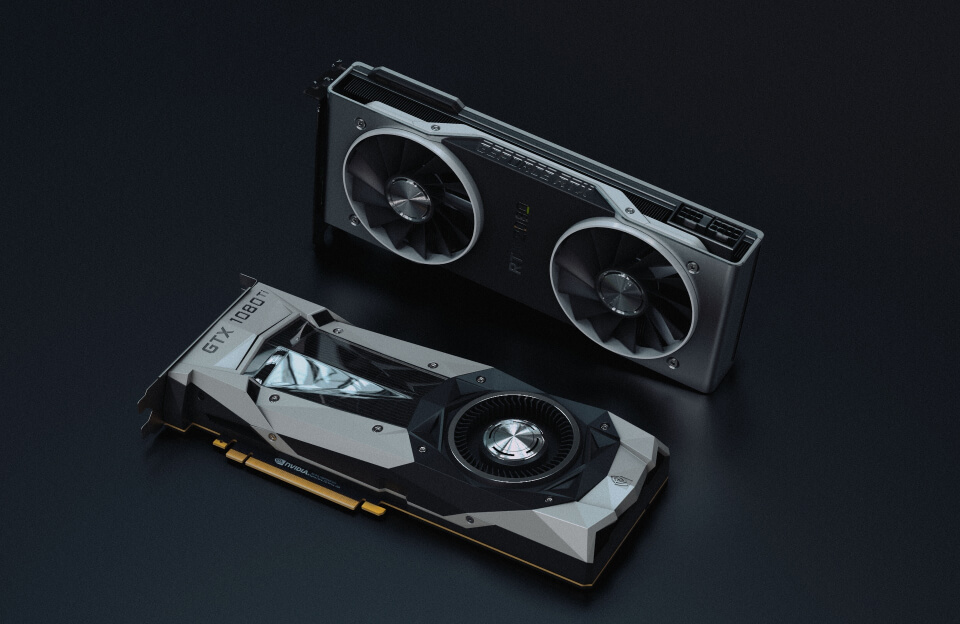
Prioritize the Graphics Card
For 1080p, the GPU outshines the processor in most scenarios. A card that can sustain 60–90 fps in current games will future‑proof your system for a year or more. Modern choices range from the RTX 3060 to the more robust RTX 3070 or AMD Radeon RX 6700 XT. These GPUs deliver plenty of core clocks and memory bandwidth for 1080p and comfortably handle 1440p in some titles if you’re willing to dial settings down.
Use a table to compare typical 1080p frame rates, price, and power draw. This quick reference helps you decide between buying a higher‑tier GPU or saving for better CPU options.
| GPU | Avg 1080p FPS (Max Settings) | Price (USD) | Power (W) |
|---|---|---|---|
| NVIDIA RTX 3060 | 90–110 | 349 | 170 |
| AMD Radeon RX 6700 XT | 85–105 | 399 | 230 |
| NVIDIA RTX 3070 | 120–140 | 499 | 220 |
Balance CPU and RAM for 1080p
Once the GPU is settled, you can tune the processor and memory. For 1080p, 6–8 cores are more than sufficient; gaming engines are increasingly parallelized but still benefit from higher single‑thread performance. The Ryzen 5 5600X offers a sweet spot in price and performance, competing with Intel’s 10th‑generation Core i5 chips. Dual‑channel 16 GB of DDR4 at 3200 MHz gives you a good safety net for future titles that may demand more memory.
If you’re a budget beginner, pairing a GTX 1660 Ti with the AMD Ryzen 3 3100 or Intel Core i3‑10100 can still deliver 1080p at 60–70 fps in mainstream games. For mid‑range enthusiasts, upgrade to a Ryzen 5 5600G or Intel Core i5‑10400F and add a second memory stick to keep latency low.
Upgrade Path Suggestions
- Entry‑Level: GTX 1660 Ti + Ryzen 3 3100 + 8 GB RAM (upgrade to 16 GB later)
- Mid‑Range: RTX 3060 + Ryzen 5 5600X + 16 GB DDR4 3200 MHz
- High‑End: RTX 3070 + Ryzen 7 5800X + 32 GB DDR4 3600 MHz
Storage & Cooling—Fast and Consistent
Fast load times and stable temperatures keep your gaming sessions fluid. Switching from a mechanical HDD to a PCIe NVMe SSD can cut game boot times from 30‑seconds down to 2–4 seconds. Popular models include the Samsung 970 Evo or the WD Black SN750. For those on a tighter budget, the Crucial P5 offers great speed at a lower price point.
Keep an eye on thermals; 1080p can push GPUs and CPUs near 70–85 °C under load if airflow is poor. Add a second 120 mm case fan or upgrade to a high‑efficiency aftermarket cooler. Monitoring software (e.g., HWINFO) lets you verify that temperatures stay under 80 °C on sustained runs.
Consider the Monitor and Peripherals
You can’t out‑play a 1080p monitor that can’t keep up with your GPU. A 144‑Hz panel is ideal for competitive titles. For narrative games, a 75 Hz or higher refresh provides smoother motion. Resolution is key: 1920×1080 (full HD) gives you the best balance of clarity and performance. Ensure your display’s response time is below 5 ms to avoid ghosting.
Complement your new hardware with quality peripherals: a mechanical keyboard, a high‑dpi mouse, and a headset that delivers spatial audio can elevate the experience beyond raw performance.
Finalizing Your Upgrade Checklist
- Benchmark your current system.
- Choose a GPU that fits your budget and performance goals.
- Upgrade the CPU to a 6‑core or higher model.
- Add or replace RAM to at least 16 GB.
- Install an NVMe SSD for faster load times.
- Improve cooling with additional case fans or a new cooler.
- Swap to a high‑refresh 1080p monitor.
- Update drivers and adjust in‑game settings for optimal FPS.
Budget‑Friendly Upgrades vs. Premium Builds
Choosing between incremental builds and a full overhaul depends on your timeline, budget, and how much you play. A piecemeal approach—upgrading the GPU first, then the CPU later—allows you to spread costs and immediately see gains. If you’re ready to invest 800–1200 USD upfront, installing an RTX 3070, Ryzen 5 5600X, 16 GB of DDR4, and a 1 TB NVMe SSD can yield a balanced, future‑proof rig.
Conclusion: Build Your 1080p Powerhouse Today
Upgrading for 1080p gaming is a strategic, cost‑effective way to keep your PC competitive against the latest releases. By prioritizing the GPU, balancing the CPU and memory, and ensuring fast storage plus efficient cooling, you create a setup that delivers smooth, high‑refresh gameplay for the next few years. Don’t wait—start assembling your roadmap, pick the parts that match your budget, and watch your 1080p titles come alive with crisp visuals and buttery‑smooth performance.
Ready to level up? Browse our recommended hardware bundles, compare prices, and begin building your dream system now.