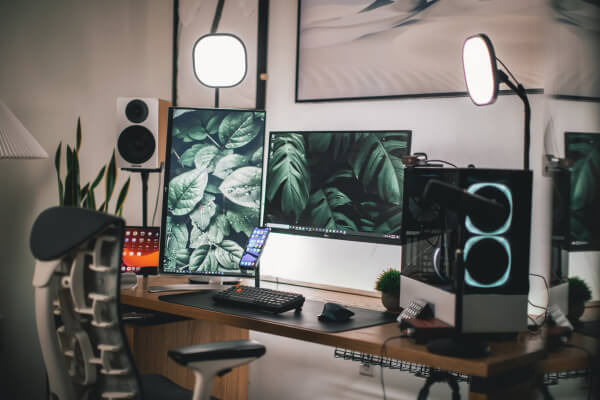
When planning a custom gaming PC build, it’s tempting to overspend on every component, but a strategic approach guarantees you get the best performance for each dollar. In this guide, we focus on exactly where to allocate extra budget to ensure a high‑end gaming experience without unnecessary expense. We’ll explore the core hardware, from the graphics card and CPU to cooling, power supply, and storage, all within the context of a custom gaming PC build.
Choosing the Right Graphics Card for Your Custom Gaming PC Build
The graphics card drives your visual output and is the most critical component for immersive gaming. Selecting a GPU that matches your resolution and target frame rate—such as the NVIDIA RTX 3080 or AMD Radeon RX 6800 XT—offers the best price‑to‑performance ratio for most enthusiasts. A top‑tier card not only improves frame rates but also provides features like ray tracing and DLSS that future‑proof your rig for upcoming titles. Investing in a high‑quality GPU is a reliable way to boost your custom gaming PC build’s overall performance.
When budgeting for a GPU, consider the power draw and the quality of the VRAM. Cards with at least 8 GB of GDDR6 memory can handle 4K textures without stutter, and higher power limits often enable better overclocking headroom. Remember that a more powerful GPU typically requires a robust cooling solution and a compatible motherboard to avoid bottlenecks. Researching benchmark data from Graphics Processing Unit (GPU) articles helps you gauge real‑world performance differences.
For budget‑conscious builders, you can still achieve excellent gaming performance by choosing a slightly older generation card, such as the RTX 2070 or Radeon RX 5700. These GPUs often sit on a sweet spot between cost and capability, especially when paired with the right CPU and memory. The key is to match the GPU’s potential with the rest of the system; a weak CPU or limited RAM can severely limit a high‑end GPU’s benefits. In a custom gaming PC build, balancing the GPU with complementary components yields the best return on investment.
Ultimately, the GPU often accounts for the largest portion of a build’s cost, so allocating extra funds here is generally the smartest choice. A powerful graphics card enhances not only current titles but also upcoming releases that demand higher fidelity graphics. It also allows you to explore advanced visual settings, such as higher frame rates in VR or next‑generation features, making the investment worthwhile in the long run. When deciding where to spend more, a top‑tier GPU should usually be at the top of your list.
Investing in a High‑Performance CPU for Your Custom Gaming PC Build
The central processing unit (CPU) is the brain of your gaming system, handling everything from game logic to frame calculations. In a custom gaming PC build, a modern 6‑ to 12‑core processor, like the AMD Ryzen 9 5900X or Intel Core i9‑11900K, delivers smooth gameplay across a range of titles. The CPU’s clock speed and core count directly influence frame consistency, especially in CPU‑intensive games such as strategy titles or large‑scale open‑world adventures.
When adding to the budget, choosing a CPU with a high boost clock and efficient architecture can reduce bottlenecks in your build. AMD’s Zen 3 CPUs and Intel’s Alder Lake processors both offer strong single‑thread performance and efficient multi‑threading, which are essential for modern game engines. A top‑end CPU also supports newer technologies such as DDR5 memory and PCIe 4.0, future‑proofing your custom gaming PC build for next‑generation upgrades.
While CPU prices have surged, their performance per dollar ratio remains one of the highest in the market. Allocating extra funds here ensures that the GPU is never starved for data, allowing it to operate at its full potential. Additionally, a powerful CPU reduces the need for frequent overclocking, providing a more stable and less power‑hungry build. For many gamers, a strong CPU is as important as a strong GPU for achieving high frame rates and low latency.
To fully benefit from a high‑performance CPU, pair it with a compatible motherboard that offers robust power delivery and ample PCIe lanes. The motherboard should also support the fastest available memory speeds to complement the CPU’s architecture. A well‑balanced custom gaming PC build will have both the CPU and GPU working harmoniously, maximizing performance while staying within budgetary constraints.
Prioritizing Premium Cooling Solutions for Your Custom Gaming PC Build
Effective cooling is essential for maintaining optimal performance and longevity of overclocked components. High‑quality air or liquid coolers can significantly lower system temperatures, allowing the CPU and GPU to sustain higher boost clocks without throttling. Depending on your budget, a well‑chosen cooler can add substantial value to a custom gaming PC build.
Air cooling solutions, such as the Noctua NH-D15 or be quiet! Dark Rock Pro 4, provide robust performance with low noise levels. In contrast, all‑in‑one liquid coolers like the Corsair Hydro Series H100i typically offer better heat dissipation at the cost of higher initial investment. For enthusiasts seeking maximum thermal efficiency, a custom loop may be justified, but it often exceeds the needs of a standard gamer.
In addition to the primary CPU cooler, you should consider case airflow, fan placement, and cable management. A well‑ventilated case with multiple intake and exhaust fans ensures that hot air is expelled quickly, keeping GPUs and RAM temperature in check. Proper cable management not only improves airflow but also makes future upgrades easier, reducing the long‑term maintenance cost of your custom gaming PC build.
Some manufacturers offer performance‑boosting features in their cooling assemblies, such as integrated fan controllers or RGB lighting. While RGB may be desirable for aesthetics, it can add to the cost. Prioritizing cooling performance over visual flare often results in a more stable and efficient build. Investing in reliable cooling is a wise choice for any custom gaming PC build that will push components to their limits.
Ensuring a Reliable Power Supply and Motherboard for Your Custom Gaming PC Build
A dependable power supply unit (PSU) is foundational for system stability. For GPUs that require 650 W or more, choosing a high‑efficiency 80+ Gold or Platinum PSU guarantees consistent voltage delivery and reduces energy waste. Over‑provisioning, for example opting for a 750 W PSU when you need 650 W, protects against voltage fluctuations and provides headroom for future upgrades.
Motherboard quality affects both performance and durability. Boards that support the latest PCIe 4.0 standard, have multiple M.2 slots, and feature robust VRMs are recommended for a custom gaming PC build. A high‑quality motherboard also facilitates overclocking and better power distribution to the CPU and GPU, which can improve overall system efficiency. The price difference between budget and premium boards is often justified by the added reliability and feature set.
When choosing a PSU, pay attention to modular cable design, which reduces cable clutter and improves airflow, especially when combined with premium cooling solutions. Modular or semi‑modular PSUs also allow you to attach only the cables you need, limiting obstruction for case fans. A well‑designed power supply also includes protection features such as OVP, UVP, and PF, which safeguard your components against power anomalies.
Some manufacturers offer “factory‑rigged” PSU + cable bundles that claim to provide better performance. It’s wise to research independent reviews and efficiency ratings before committing to such bundles. In a custom gaming PC build, investing in a reputable PSU brand like Seasonic or Corsair usually pays dividends in reliability and longevity.
Optimizing Storage: SSD vs HDD for Your Custom Gaming PC Build
Fast storage is crucial for reducing load times and ensuring smooth gameplay, especially in open‑world or MMO titles where assets stream dynamically. Solid‑state drives (SSDs), particularly NVMe M.2 drives, offer orders of magnitude higher read/write speeds compared to traditional hard drives. In a custom gaming PC build, an NVMe SSD as the primary drive can significantly decrease boot times and patch durations.
While SSDs come at a higher cost per gigabyte, the performance benefits often outweigh the price disparity, especially for high‑resolution textures and large game libraries. For archival storage or media files, a 4‑TB or larger HDD can provide economical capacity without compromising system performance. Balancing SSD and HDD storage options allows you to allocate budget efficiently while maintaining speed for the most critical data.
When selecting an SSD, consider the drive’s endurance rating, measured in terabytes written (TBW). Drives with higher TBW ratings often endure more write operations before degradation, which is essential for users who install and uninstall games frequently or run demanding applications. Memory interfaces such as PCIe 4.0 can further enhance performance, but ensure your motherboard supports these specs to avoid bottlenecks.
In addition to physical storage, firmware and driver updates can unlock further performance gains. Keeping your SSD’s microcode up to date ensures optimal compatibility with your case cooling and motherboard firmware. In a custom gaming PC build, combining fast storage with solid cooling and power management can create an overall harmonious system that stays responsive under load.
Conclusion and Call-to-Action
When determining where to spend more in a custom gaming PC build, prioritize the graphics card and CPU first, as they have the most significant impact on gaming performance. Follow these upgrades with premium cooling, a reliable PSU and motherboard, and fast storage to ensure a balanced, future‑proof system. By concentrating your budget on high‑quality components that directly affect frame rates and stability, you can avoid overspending on peripherals or cosmetic accessories that do not contribute to performance.
Our recommended approach saves you money in the long run while delivering a superior gaming experience. If you’re ready to build or upgrade, start with a detailed component list, check each part’s compatibility, and shop wisely during sales or with reputable resellers. Remember, a well‑budgeted custom gaming PC build not only performs better now but also adapts to the next generation of games with ease.
Ready to elevate your gaming rig? Consult our component compatibility checker, browse the latest deals, or contact our expert team for personalized guidance. Your dream custom gaming PC build is within reach—every dollar spent strategically brings you closer to unbeatable performance and reliability.