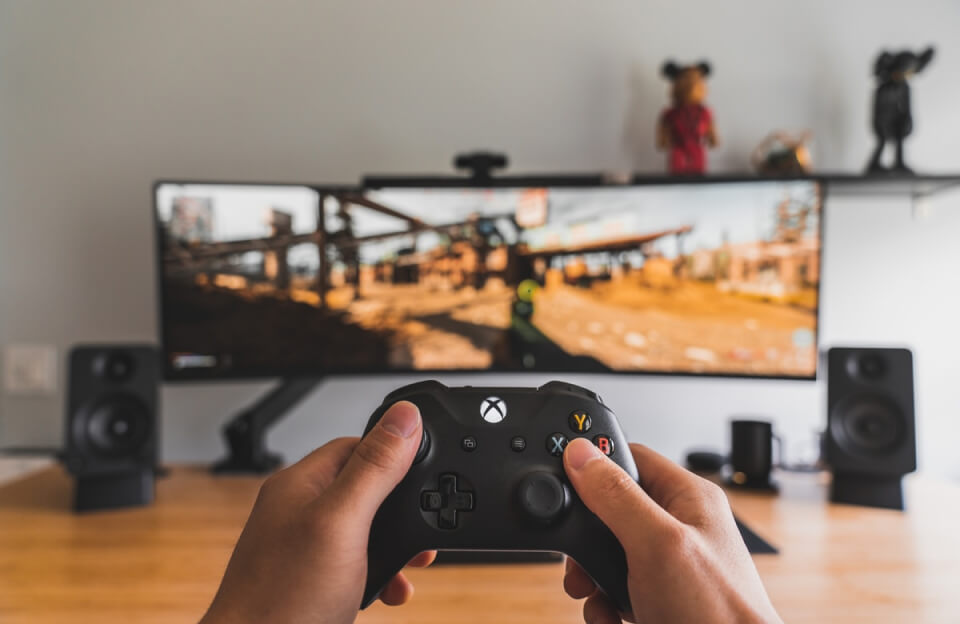
When you grind through titles like Elden Ring or Cyberpunk 2077, a smooth 60 fps experience is more than a nicety—it’s essential for reaction‑time and immersion. However, many gamers find their builds cap out after a few months of upgrades, even though the software still runs flawlessly. The root of most performance dips lies not in the game itself but in an older or mismatched hardware foundation. In this guide we’ll walk through how to upgrade a gaming PC for stable frame rates, focusing on the right components, optimal configuration, and smart tuning.
Assess Your Current Setup
Before you drop a dollar on a new GPU, pull the current specs from CPU-Z or similar. Verify your processor clock, memory speed, and existing GPU memory. Check your power supply’s wattage and real‑world headroom; a 450 W supply will choke a 3080. Also confirm your cooler meets the TDP of your CPU to avoid throttling.
Use system monitoring tools like HWMonitor or MSI Afterburner to capture real‑time temperatures and utilization. If your GPU is consistently above 90 °C or your CPU is pegging at 100 % while gaming, you’re in danger of throttling and frame drops. Even a modest 1‑2 GHz boost can translate to a steady 10‑15 fps, so understand where your bottleneck lies before you buy.
Don’t forget to test your drives for latency and read speeds. An SSD with a sustained 500 MB/s will load textures faster than a 250 MB/s HDD, reducing stutter during level transitions. Many gamers overlook storage speed as the last critical component, but it can make the difference between a fluid experience and a jittery one.
Choose the Right GPU
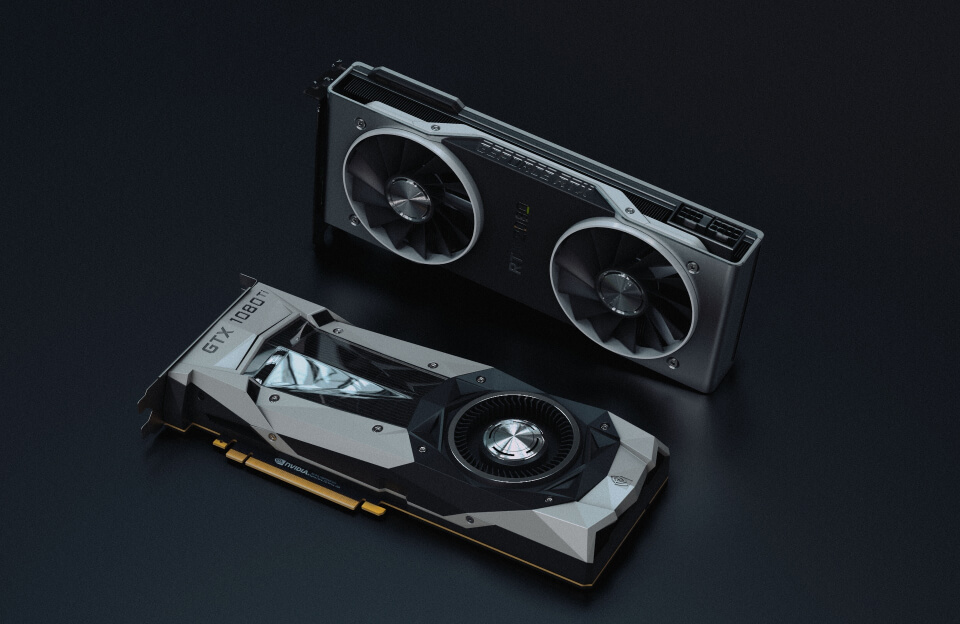
A graphics card often delivers the most noticeable jump in frame rates. For 1080p and 1440p gaming, the NVIDIA RTX 3070 or AMD Radeon RX 6800 provide a sweet spot between price and performance. According to the TechSpot review, the RTX 3070 tops many competitors with 70 fps in RTX‑enabled titles at 1440p.
Consider your monitor’s refresh rate. A 144 Hz panel paired with a 3840×2160 resolution demands a high‑end GPU like the RTX 3080 Ti. If you plan to stay at 1080p, a GTX 1660 Super or AMD RX 590 can still offer 60 fps in less demanding games, keeping costs low.
When upgrading, pay close attention to the VRAM. Modern games such as Red Dead Redemption 2 use 9–10 GB of VRAM at 1440p. A card with only 4 GB will force your system to swap, severely reducing frame stability. Aim for at least 6 GB on mid‑range GPUs and 8 GB on premium models.
Budget wisely by comparing second‑hand or refurbished options. The Graphics Processing Unit on Wikipedia lists power consumption ratings that can help you choose a card that fits your PSU without over‑straining it.
- Check the TDP and ensure your PSU can match it.
- Verify VRAM size against your target resolution.
- Consider ray‑tracing impact for future titles.
- Use benchmark tools like 3DMark to quantify expected gains.
Upgrade the CPU and RAM
Even with a top GPU, a weak processor can stall the pipeline. Modern triple‑byte pipelines and AVX‑512 support in the latest Intel i9 or AMD Ryzen 7000 series allow for higher core counts and efficient multitasking. For most gamers, a quad‑core or hexa‑core at 3.5 GHz provides a solid baseline.
When upgrading, assess socket compatibility. A new CPU may require a new motherboard, so factor in the cost of a new chassis, motherboard, and BIOS update. AMD’s AM4 platform, for example, supports many CPUs across several generations, offering a smoother upgrade path.
RAM is equally important. Aim for 16 GB of DDR4 or DDR5 at 3200 MHz or faster. Many games now use >8 GB of memory, and 32 GB can future‑proof your system for large open worlds or when running multiple background apps.
Check dual‑channel operation by installing matched sticks in the correct slots. A mismatch can reduce memory bandwidth dramatically, leading to a 15‑20 % frame‑rate penalty in memory‑bound scenarios.
Optimize Cooling and Power Supply
Heat is the silent thief of performance. If your temperatures rise above 80 °C, modern GPUs will throttle to prevent damage. Install a quality air cooler or an AIO liquid cooler that covers at least the CPU and a few GPU fans.
Consider a case with excellent airflow. Features such as intake and exhaust fans that are positioned to carry hot air out of the chassis can lower temperatures by up to 10 °C, creating a noticeable boost in stability.
Your power supply must match the power draw of all components. An 80+ Gold certification guarantees efficiency, which reduces heat and protects delicate components. A PSU with at least 80 % efficiency under load also saves electricity in the long run.
Use a power meter to confirm actual consumption. Websites like Newegg’s power supply calculator can help you estimate the wattage you need.
| Component | Power (W) | Recommendation |
|---|---|---|
| CPU | 35–125 | Depends on generation |
| GPU | 220–350 | Use TDP for base GPU |
| Motherboard | 30–60 | ATX typical |
| RAM | 5–10 | DDR4/DDR5 |
| Storage | 4–10 | SSD/HDD |
| Fans | 2–5 | Depends on chassis |
| PSU Headroom | 20–30% | Reserve for spikes |
Fine‑Tuning Settings & Drivers
After installing new hardware, update all drivers from the vendor’s official site. Nvidia’s GeForce Experience and AMD’s Radeon Software automatically detect and install the latest stable drivers that include performance optimizations and bug fixes. For CPU, check the BIOS for any updates that improve power management.
Once drivers are installed, run a benchmark such as 3DMark Time Spy or Unigine Heaven. Compare results with previous hardware to verify a stable increase. If your frame rates drop under load, revisit the GPU fan curve or check for power limits imposed by the power‑saving mode.
Adjust game settings in the options menu. Lowering texture quality or disabling ray tracing can reduce GPU memory usage and heat. However, most titles offer a “performance” mode that keeps the frame rate smooth while the graphics remain visually acceptable. Using variable‑rate shading and G‑Sync or FreeSync will further reduce tearing and stutter without hurting performance.
To lock frame rates, enable V-Sync or the adaptive sync option. This feature synchronizes the GPU’s output with your monitor’s refresh rate, preventing screen tearing and maintaining a consistent fps cap.
Conclusion: Build a Stable, Long‑Term Gaming Experience
Upgrading a gaming PC for stable frame rates is not a one‑stop shop—it’s a series of targeted improvements that work together. Begin with a thorough assessment, choose a GPU that matches your resolution and refresh rate, and complement it with a balanced CPU, sufficient RAM, and adequate cooling. Finally, fine‑tune settings and keep drivers up to date to maximize the lifespan of your new investment.
Ready to elevate your play to 60 fps and beyond? Start by ordering the right components, follow this checklist, and watch your gaming experience transform from jittery to buttery‑smooth. Take action now and upgrade your PC for the future of gaming.