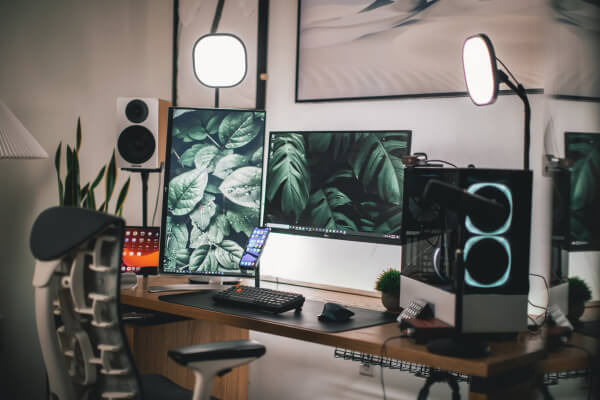
Building a Custom Gaming PC can feel overwhelming, especially when you consider how every component contributes to the final price. In this complete cost breakdown, we’ll walk you through each part—from the processor to the mouse—so you know exactly how that budget is allocated. Whether you’re a weekend streamer or a competitive e‑sport athlete, knowing the true cost helps you make smarter, more budget‑friendly decisions.
CPU & Motherboard
Choosing the right CPU and motherboard sets the foundation for performance and future upgrades. The price difference between an entry‑level Intel Core i5 and a top‑tier AMD Ryzen 9 can be several hundred dollars, but it also determines which socket, chipset, and expansion slots you’ll have. For instance, the Intel Core i7‑13700K from 2023 sits near $350, while the AMD Ryzen 7 7700X retails for about $360. Both support DDR5 memory but differ in integrated graphics, power consumption, and overclocking headroom. Pairing your processor with a compatible motherboard—such as the ASUS ROG Strix Z690‑E Gaming or the MSI MPG B650‑M Mortar—adds roughly $150–$250 to your build, depending on whether you choose a premium AIB (all‑in‑one) kit or a base board with Wi‑Fi and RGB lighting.
Memory & Storage
RAM and storage are twin pillars of a gaming rig. Eight or sixteen gigabytes of DDR5 are minimal for modern titles, but 32 GB becomes essential for future‑proofing and streaming. A 16 GB kit of Corsair Vengeance LPX DDR5‑6000 typically costs $80, while 32 GB kits run around $160. For storage, the 1 TB PCIe 4.0 NVMe drive from Western Digital or Samsung offers read/write speeds exceeding 5,500 MB/s, a sweet spot for quick load times; it usually sells for $120–$150. Adding a secondary 500 GB SATA SSD for OS and essential programs can be as low as $35, rounding out the storage budget to roughly $350–$450.
Graphics Card
Almost all gamers recognize that the graphics card is the heart of any custom build. In 2023, the NVIDIA GeForce RTX 3080 delivers 10 GB of GDDR6X and 10,496 CUDA cores, making it a staple for 4K gaming; it averages $700 to $800 on resale markets, according to the NVIDIA Partner Program. AMD’s Radeon RX 6800 XT offers 16 GB of GDDR6 and solid rasterization performance for a price of around $580. When factoring in power budgets and potential overclocking, a top‑tier GPU can consume 350 W or more, necessitating a power supply with a matching rating. The card itself—whether brand‑name or boutique—often accounts for 35–40 % of the total build cost.
Cooling & Power Supply
Effective heat dissipation keeps your system stable during marathon sessions. A budget all‑in‑one liquid cooler like the Corsair Hydro H60 or a powerful air cooler such as the Noctua NH‑D15 XT‑K can range from $45 to $120. For a more aggressive overclock, a custom loop adds $150–$200, but offers unparalleled cooling performance. Meanwhile, a power supply unit is non‑negotiable; a certified 80 Plus Gold 650 W PSU sits around $100, whereas a 1000 W Platinum unit can reach $180. Quality PSUs also provide modular cables and a 10‑year warranty, safeguarding your investment.
Peripherals & Software
Beyond internals, peripherals bring a gaming experience to life. A high‑refresh‑rate 144 Hz monitor priced at $250, a mechanical keyboard around $90, and a gaming mouse for $50 collectively add $400 to the build. Headsets, microphones, and a comfortable chair can bring the total peripheral cost to $700–$900. Regarding software, you’ll need an operating system—Windows 11 Home for $140—and any optional anti‑cheat or game‑specific overlays. Adding an antivirus subscription can cost $60–$100 per year, but it protects your system from malware that could compromise performance.
Assembly & Additional Costs
DIY assembly versus professional installation can split the ballpark cost by as much as $100. If you’re comfortable opening the case, downloading a build guide from TechSpot or YouTube can save money, but you’ll still spend about $35 on hand tools and a thermal paste tube. On the other hand, a technician may charge $100–$150 for mounting, cable management, and testing. Some builders also allocate a contingency budget—typically 5–10 % of the total—for price fluctuations of GPU and motherboard chips, especially during periods of high demand. Adding this margin keeps you from scrambling for parts at the last minute.
Warranty & Maintenance
Building a custom rig carries long‑term responsibility. Most components come with a one‑year manufacturer warranty, but extended warranties for $50–$70 can cover a second year. Periodic cleaning—every three months—keeps dust from clogging fans and radiators, preserving thermal efficiency. Replacing thermal paste every two years can improve CPU cool performance by up to 5 °C. Monitoring software such as HWMonitor or MSI Afterburner provides real‑time temperature and fan speed data, alerting you before hardware failure. A proactive maintenance schedule saves both headaches and potential component replacement costs.
Upgrade Path and Future‑Proofing
Planning for future upgrades is a key strategy in cost management. By selecting a motherboard with at least two additional PCIe 4.0 slots and an extra DIMM bank, you can add a graphics card or extra RAM without replacing the entire board. Similarly, choosing a power supply that delivers 10–15 % headroom allows you to integrate higher‑TDP components later. Finally, storing spare parts like extra thermal paste or cables will save you from emergency replacements when a peripheral fails.
Budget Variations: Low, Mid, High
Your initial budget heavily dictates the spec range. A low‑budget build (under $1,000) might rely on a mid‑range GPU such as the RTX 3060 and a modest 8 GB of RAM, while a mid‑tier build ($1,500–$2,000) can include an RTX 3070 alongside 16 GB of DDR5. A high‑end configuration (over $2,500) can afford a high‑TDP card like the RTX 4090, 32 GB of RAM, and a high‑refresh 240 Hz monitor. Tailoring your build to the price tier ensures you maximize performance per dollar and avoid overpaying for unnecessary features.
Component Selection Checklist
Before purchasing, use this quick checklist to verify compatibility and prevent costly mistakes: A thorough checklist protects against socket mismatches, inadequate power, and insufficient cooling, all of which can derail a build.
- Confirm CPU and motherboard socket match.
- Check DDR5/DDR4 support and maximum RAM capacity.
- Ensure the GPU fits the case with available clearance.
- Verify PSU wattage exceeds total system draw plus a 20–30 % safety margin.
- Confirm case airflow and cooling options are adequate.
- Audit peripheral compatibility and driver support.
Where to Buy and Shipping Considerations
Choosing the right retailer can shave hundreds off your total cost. Major e‑commerce platforms like Amazon, Newegg, and Micro Center offer competitive prices, daily deals, and bundled kits. Seasonal sales—such as Black Friday, Cyber Monday, and mid‑year clearances—often bring GPU and motherboard prices down by 10–20 %. Local brick‑and‑mortar stores provide instant availability and in‑person support, though they sometimes charge higher prices. Shipping fees can range from $10 to $50 depending on carrier and distance; free shipping thresholds frequently apply for orders over $200. Finally, consider the return policy—especially for GPU or power supply units—to ensure a hassle‑free upgrade path if a component fails.
Cost Summary (Approximate)
| Component | Price Range (USD) |
|---|---|
| CPU & Motherboard | $300 – $600 |
| Memory & Storage | $350 – $450 |
| Graphics Card | $580 – $800 |
| Cooling & PSU | $200 – $300 |
| Peripherals & Software | $400 – $900 |
| Assembly & Extras | $0 – $150 |
Conclusion & Next Steps
Understanding every line item transforms a mysterious price tag into a clear investment plan. Armed with this cost breakdown, you can allocate your budget, prioritize upgrades, and avoid costly overspending. Ready to build your dream Custom Gaming PC? Start your build today and step into a higher‑performance gaming experience that won’t break the bank.