If you’re looking to upgrade a gaming PC without reconstructing your entire system, you’re in the right place. Many gamers think a full rebuild is necessary when they want better performance, but most core components can be swapped or upgraded incrementally. By following a systematic approach, you can keep the same case, motherboard, and power supply while boosting your frame rates and load times. In this guide we’ll walk through the key parts to target, how to assess compatibility, and tips to keep costs low.
How to Upgrade a Gaming PC: Start with a Clear Plan
Before you open the case, inventory your current specs: processor model, amount of RAM, storage type, and especially the GPU. Benchmark tools like Geekbench or UserBenchmark allow you to gauge which component is the bottleneck in your game load or play sessions. Set a realistic budget that balances performance gains with your long‑term upgrade path. Remember, the most common bottleneck for many 2023 gamers is the GPU, followed by CPU clock speeds and insufficient RAM.
Benchmark analysis will often reveal that upgrading the graphics card yields the highest return on investment for 1080p or 1440p gaming. Even a mid‑tier replacement can lift frame rates by 30–50 % thanks to modern APIs like Vulkan and DirectX 12. Keep an eye on the total power draw: older motherboards may need a higher capacity PSU if you add a high‑end GPU. If your power supply is only 400 W, consider a 550–650 W model from a reliable brand such as EVGA SuperNOVA 650W to future‑proof your build.
Upgrade a Gaming PC by Enhancing the GPU
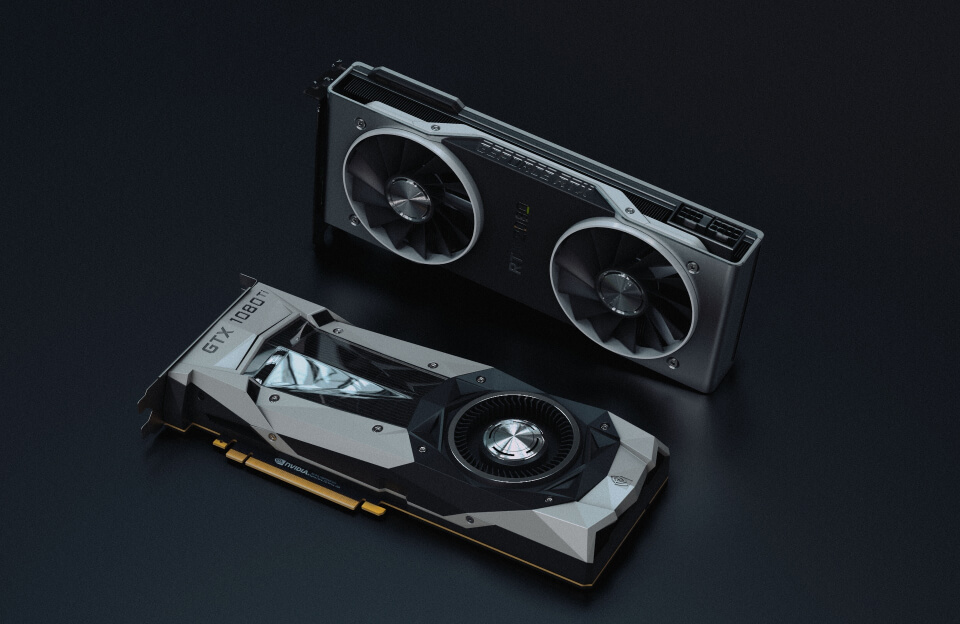
Modern gaming PCs typically use a single PCIe 3.0 or 4.0 slot for the GPU, so make sure your board supports the bandwidth of the card you intend to install. Review the card’s memory size versus the game requirements; 6 GB for 1080p is adequate, but 10 GB or more becomes essential for 4K or future titles. For budget‑friendly options, look at the GeForce RTX 3060 Ti, while the performance ladder continues up to the RTX 4080 for enthusiasts. Don’t forget to check the fan noise profile if you live in a quiet environment.
- PCIe version compatibility
- VRAM size and speed
- TDP and PSU capacity
- Physical dimensions to fit the case
Upgrade a Gaming PC with a Faster CPU and More RAM
In parallel to the GPU, a sluggish CPU can throttle your gaming experience, especially in titles that rely on CPU threading or physics calculations. Check your motherboard’s socket—LGA 1200 for Intel 10th‑gen, LGA 1700 for the 12th‑gen, or AM4 for AMD Ryzen 3000/5000 series. Upgrading to a newer chipset may require a motherboard swap, but it also opens the door to higher clock speeds and more PCIe lanes. The cost difference between a 4‑core and an 8‑core CPU can be significant, so evaluate your game library first.
RAM speed and capacity play a pivotal role in smooth gameplay. If you’re stuck at 8 GiB, moving to 16 GiB or 32 GiB can eliminate stutter in demanding open‑world games. Look for a dual‑channel kit that matches the motherboard’s supported speeds, typically 2933 MHz or 3600 MHz for modern builds. Remember that the memory controller lives on the CPU, meaning CPUs with higher memory bandwidth yield better performance gains.
Upgrade a Gaming PC by Adding Solid‑State Storage
Storage upgrades are one of the fastest ways to reduce load times without touching any other parts. An NVMe M.2 SSD plugs directly into the motherboard’s M.2 slot, offering sequential read/write speeds that dwarf SATA drives. For a midrange option, consider the Samsung 970 EVO Plus; for a premium experience, the 990 Pro provides industry‑leading performance. If you already have a SATA SSD, adding an M.2 card can free up a drive bay and give you room for future expansion.
When planning capacity, keep the game library in mind. AAA titles typically require 50–100 GiB each, so allocating 1 TB or more gives future headroom. Hybrid storage setups—combining a large SATA HDD for bulk media with an SSD for operating system and games—can strike the right balance between speed and affordability.
Upgrade a Gaming PC: Optimize Power Supply and Cooling
An efficient 80+ Gold or Platinum PSU not only draws less current, but it also reduces heat output, keeping your components cooler. When installing a high‑power GPU, double‑check the rated wattage and ensure the manufacturer recommends your PSU model. Older power supplies often use non‑modular cables; swapping to a fully modular design simplifies cable management and improves airflow across the case. The Cooler Master Moonlight 850W is a popular choice for gamers seeking a clean look.
Cooling is crucial for maintaining performance and longevity. Install at least one intake fan to bring cool air over the GPU and a matching exhaust fan at the rear or top of the case. For high‑end builds, an all‑in‑one liquid cooler can keep the CPU temperatures below 45 °C under load. Make sure the case has sufficient airflow; most manufacturers now design cases with optimized cable routing to avoid obstruction. Regularly clean dust filters to maintain at least a 40 °C change in temperature during gaming.
Below is a quick reference for GPU choices and their recommended power supplies. Use it to ensure compatibility before purchasing.
| GPU | VRAM | Recommended PSU |
|---|---|---|
| RTX 3060 Ti | 8 GB GDDR6 | 550 W |
| RTX 3070 | 8 GB GDDR6 | 650 W |
| RTX 4080 | 16 GB GDDR6X | 850 W |
Before installing new parts, power down and unplug the PC, then discharge static by touching a grounded metal surface. Slot in the CPU, insert the RAM, and secure the cooler following the thermal paste instructions. When seating the GPU, align it with the PCIe slot and lock it with the retention screw. Finally, plug in the updated PSU cables, reconnect the storage drives, and double‑check all connections.
Upgrade a Gaming PC: Final Steps and Tips
Now that you’ve identified the bottleneck components and verified compatibility, it’s time to assemble. Keep track of screws and cables during the process to avoid losing hardware parts. After the build is complete, boot into BIOS and check that all components are recognized and voltage settings are within safe limits. Save the BIOS profile and proceed to install the operating system or boot from a clean installation media.
Once the OS is installed, allocate time for drivers. Download the latest GPU drivers from the manufacturer’s website, and install chipset drivers for the motherboard. If you experience instability, revisit the BIOS settings—enabling XMP for RAM or adjusting CPU cores can resolve many issues.
Congratulations, your upgraded gaming PC is ready to deliver better performance without the hassle of a full rebuild. If you encounter any hiccups, consult online communities like Reddit r/buildapc or the manufacturer’s support portal. Share your experience in the comments, and consider subscribing for more step‑by‑step upgrade guides. Next up: customizing your RGB lighting and optimizing in‑game settings for maximum smoothness. Happy gaming!