Building a custom PC is an engaging journey that allows enthusiasts to tailor performance, aesthetics, and power consumption to their exact preferences. Yet the central question that often arises in online forums and walkthroughs is identical: what is the Custom PC Cost? Whether you’re a seasoned overclocker looking to break the limits of gaming graphics or an entry‑level builder aiming for cost‑efficient performance, knowing the realistic price ranges before you begin sourcing parts will save you from surprise budget blowouts. In this guide we break down every major component that contributes to a custom build’s total expense, from the core CPU and GPU engines to the quietest case fans and peripheral accessories, and provide you with a clear, realistic cost map that spans budget‑to‑high‑end gaming rigs.
Custom PC Cost: Core Components Breakdown
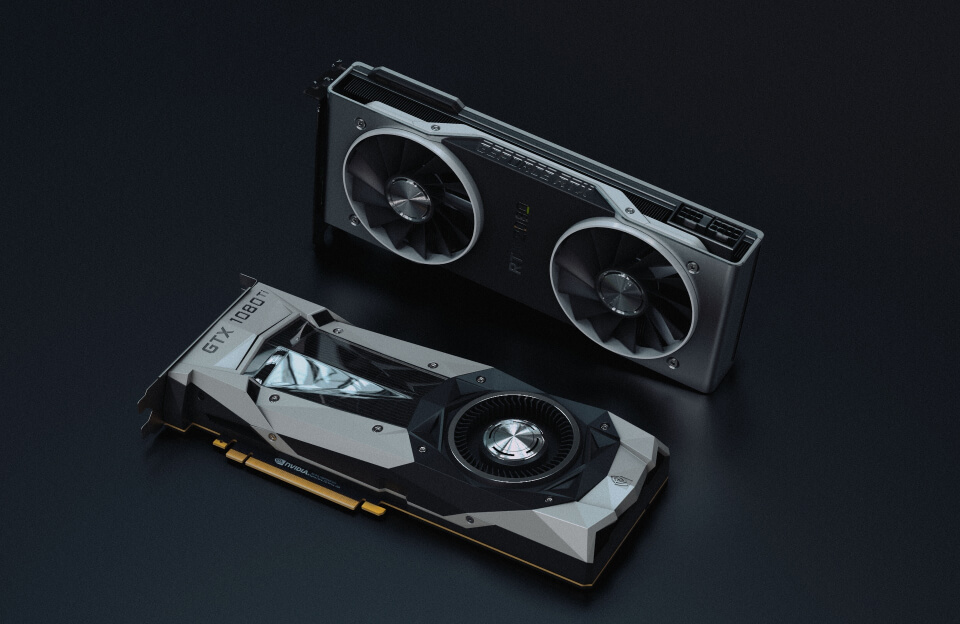
At the heart of every custom PC are the CPU and GPU, the twin powerhouses that drive processing speed and rendering fidelity across software and games alike. A current generation Intel Core i5 or its AMD Ryzen 5 equivalent typically costs between $150 and $250 for mainstream releases, while premium flagship options leap to $400 or more, mirroring the performance gains described on CPU Wikipedia. The GPU, however, can introduce far greater price volatility; a mid‑tier GeForce RTX 3060 or an AMD Radeon RX 6600 falls often into the $300–$400 bracket, whereas enthusiast‑grade models such as the RTX 4080 can exceed $1,500, a figure that underscores the extraordinary ray‑tracing cores and vast memory buffers promoted by NVIDIA. Collectively, your custom PC cost will see a significant spike from these two components alone, making them the first and most expensive decision points in any build.
Custom PC Cost: RAM and Motherboard
To properly manage data flow between the CPU, GPU, and storage, you’ll need a robust motherboard and sufficient RAM, both of which are critical yet often underappreciated cost factors. A 32 GB DDR4 kit, which balances performance and future‑proofing for many gamers and light content creators, is quoted between $90 and $120 on price aggregators, with high‑frequency 3600 MHz or 4000 MHz variants reaching $160+; PCPartPicker reports these figures regularly. Meanwhile, motherboard prices depend on chipset, form factor, and features—an ATX board with PCIe 4.0 support might set you back $120–$200, whereas a more modest mATX variant typically costs around $80, offering a slightly smaller footprint and price advantage. In sum, the RAM and motherboard together occupy roughly $200–$400 of the custom PC cost in a standard mid‑tier build.
Custom PC Cost: Storage
High‑speed storage has evolved from slow mechanical hard drives into solid‑state flash that deliver blistering read/write speeds and instantaneous load times; this transition has reshaped budget calculations for modern PCs. 1‑TB NVMe M.2 SSDs are priced around $70–$110, while 2‑TB offerings can push toward $180, reflecting the increasing demand for large game libraries and media libraries cited by PCPartPicker. Should you need additional capacity or archival redundancy, a 4‑TB SATA SSD or a 6‑TB HDD will add $30–$80 to your balance, offering an inexpensive avenue to store photos, videos, and secondary applications. When you combine these options, you’ll find that the storage slice of your custom PC cost typically falls between $150 and $260 for a performance‑centric setup, with premium NVMe arrays exceeding this for bleeding‑edge professionals.
Custom PC Cost: Power Supply and Case
Safe power delivery and a reliable chassis are the unsung heroes that protect every electronic component while shaping the visual appeal of your custom PC. A 650 W PSU from trusted brands such as Corsair, Seasonic, or EVGA, rated with an 80 PLUS Gold efficiency badge, will generally run $80–$120, whereas higher‑efficiency or modular designs may climb toward $140–$160; the added cost translates into lower energy consumption and quieter operation over long periods. Meanwhile, the case itself, a space that must balance airflow, cable management, and aesthetic preferences, varies widely: a mid‑tower ATX enclosure that features tempered glass and extensive dust filters typically costs $70–$100, while premium RGB‑enabled or VR‑ready cases can surpass $200, especially in the European market. Thus, the PSU and case together contribute an additional $150–$300 to the overall custom PC cost, depending on design choices and component compatibility.
Custom PC Cost: Cooling, Peripherals, and Accessories
While the cooler plays a pivotal role in maintaining safe operating temperatures, its price can fluctuate wildly depending on performance targets and installation complexity. A high‑quality air cooler, such as the Noctua NH‑D15, normally costs around $70–$90, offering excellent thermals at a moderate price point; for users seeking silent operation, a silent fan kit may add $30. For those who prefer liquid cooling, a 240 mm AIO package with a 120 W radiator commonly falls into the $120–$150 bracket, matching the advanced temperature management benefits described by manufacturers on their AMD and Corsair sites. In a balanced build, factoring in a 3‑to‑5‑fan setup or a single 240 mm AIO, cooling can add $80–$170 to the custom PC cost while dramatically prolonging component lifespan.
Peripherals—monitors, keyboards, mice, and speakers—translate the raw power of a custom PC into tangible user experience, yet they often become the hidden cost drivers of a build. A 1080p 144 Hz monitor that prioritizes low input lag and color accuracy usually starts near $200, while a 1440p 240 Hz panel can soar to $600 or more; 4K gaming monitors typically range from $700 to $1,200, as reported by review sites such as Rtings. Mechanical keyboards with tactile feedback and RGB illumination generally span $100–$200, whereas premium devices such as the Logitech G Pro can command upwards of $250. Mice, headphones, and speakers similarly offer a spectrum of pricing, and adding a high‑quality gaming headset can push ancillary expenses by $80–$200. Altogether, peripherals represent an often overlooked but essential portion of the custom PC cost, typically accounting for $300–$600 of the final budget.
Custom PC Cost: Budget Ranges and Scaling Tips
To help developers of all experience levels map a realistic price point, it’s useful to look at three common build categories: budget (~$600), mid‑tier ($1,200–$1,800), and high‑end (~$3,000+). A budget build would likely feature a mid‑range CPU such as an AMD Ryzen 3 or Intel Core i3, paired with a modest GTX 1650 or RTX 3050, paired with 8 GB of DDR4, an 240 GB SSD, and a 500 W PSU in a basic case—tallying roughly $600–$700 in total. A mid‑tier configuration would center on a Ryzen 5 or i5 GPU like the RTX 3070 or Radeon RX 6600 XT, 16 GB RAM, 1‑TB NVMe storage, and an 80 PLUS Gold PSU, yielding a custom PC cost of around $1,400–$1,700. The high‑end tier, featuring flagship chips, double‑capacity RAM, 2‑TB NVMe SSDs, and RGB‑enabled chassis, can easily exceed $3,200 and is catered to professionals or serious enthusiasts.
Managing cost without compromising performance comes down to prioritization and savvy purchasing decisions. First, consider buying second‑hand or refurbished components—particularly CPUs and GPUs, which can maintain over ten years of relevance—while ensuring they come with a warranty or return policy. Second, take advantage of seasonal sales like Black Friday or back‑to‑school promotions, which often slash GPU and CPU prices by 10–20 %. Third, evaluate your usage: if gaming at 60 FPS in 1080p is sufficient, opting for a mid‑tier GPU will save you several hundred dollars. Finally, plan for future upgrades by selecting a motherboard with extra PCIe slots and higher RAM slots; this small upfront investment can prevent a costlier rebuild later.
Custom PC Cost: Final Calculations and Tips
Below is a concise cost snapshot for three representative builds, illustrating how each component drives the overall custom PC cost and where you can make adjustments.
- Budget Build (≈$650) – Ryzen 3 CPU ($90) + GTX 1650 ($150) + 8 GB RAM ($40) + 240 GB SSD ($35) + 500 W PSU ($60) + basic case ($35) + cooling ($30) + peripherals ($150).
- Mid‑Tier Build (≈$1,550) – Ryzen 5 CPU ($170) + RTX 3070 ($550) + 16 GB RAM ($80) + 1 TB NVMe ($90) + 650 W PSU ($95) + mid‑tower case ($85) + cooling ($120) + peripherals ($300).
- High‑End Build (≈$3,250) – Ryzen 7 CPU ($320) + RTX 4090 ($1,600) + 32 GB RAM ($170) + 2 TB NVMe ($200) + 850 W PSU ($160) + premium case ($200) + cooling ($160) + peripherals ($480).
These figures are dynamic; prices can shift due to supply chain fluctuations, new launches, or price wars. By adjusting single components—such as swapping a high‑end GPU for a mid‑tier alternative—or by leveraging second‑hand markets, you can reduce the custom PC cost by 10–30 % while retaining most of the performance envelope.
Custom PC Cost: Warranty, Support, and Upgrade Paths
When purchasing a custom build, warranty coverage can be a critical factor in managing long‑term costs. Most reputable component manufacturers offer a standard 3‑year limited warranty on CPUs and GPUs, while motherboards and PSUs often come with 5‑year or lifetime coverage for certain brands. For parts purchased through authorized retailers, the warranty is typically honored directly by the retailer, which can simplify returns and replacements. It is also worth considering extended protection plans—particularly for pricey GPUs—if you anticipate intense usage or plan to keep the component in service for over five years.
Future‑proofing is a strategic approach that prioritizes components likely to outlast your intended usage timeline while keeping the initial cost reasonable. Selecting a motherboard with the latest chipset and plenty of PCIe 4.0/5.0 lanes allows you to upgrade a GPU or add a second NVMe drive without replacing the board. A generous RAM capacity—currently 16GB is a baseline, while 32GB ensures compatibility with upcoming 4K titles—also prevents a bottleneck that would require an overhaul. Additionally, investing in a modular 650–850 W PSU keeps the system ready for higher‑power GPUs or overclocking demands without needing a new power supply.
By dissecting each segment—CPU, GPU, memory, storage, power, cooling, case, peripherals, and accessories—you can formulate a pragmatic custom PC cost that aligns with your budget and your aspirations. The key to staying on track is continuous research and disciplined budgeting: keep an eye on price trackers, participate in community exchanges, and remember that component compatibility will save you both time and money in the long run. Ready to translate these insights into a concrete build? Start by compiling a parts list that reflects the categories we’ve outlined, verify each component’s compatibility, and let your custom PC cost transform into a reality. Happy building!