When most gamers catch the scent of a new title, the first thing that comes to mind is whether their current rig can keep up. A solid Gaming PC Upgrade is essential not just for raw performance, but for enjoying the immersive worlds that modern games promise. Whether you’re chasing 144 Hz fluidity or aiming for 4K realism, an upgrade can make the difference between a good experience and a truly competitive edge. This guide will walk you through the key components, budget strategies, and practical tips that turn a middling setup into a powerhouse.
Gaming PC Upgrade: Choosing the Right CPU
The central processing unit (CPU) is the heart of any gaming system, orchestrating everything from physics calculations to AI decision‑making. For a Gaming PC Upgrade, you need a processor that balances high single‑thread performance with enough cores to future‑proof your build. Modern titles like Elden Ring and Cyberpunk 2077 still rely heavily on single‑core speed, so look for a model with a high base clock and strong boost capabilities. In 2024, Intel’s 13th‑gen Core i7 and AMD’s Ryzen 9 7900X represent top choices on the performance scale. Both offer 12–16 cores, but the Intel chip edges out slightly in raw gaming benchmarks due to its higher boost frequencies. For gamers on a tighter budget, the AMD Ryzen 5 7600X gives excellent value, delivering comparable frame rates while cutting the price tag by roughly 20 %
When evaluating CPUs, don’t overlook peripheral factors like integrated graphics, power consumption, and motherboard compatibility. A Gaming PC Upgrade that includes a new motherboard may also necessitate new RAM. DDR5 memory, while pricier, offers higher bandwidth and lower latency, translating to smoother gameplay under heavy load. However, if you’re staying with DDR4, make sure the new board supports the latest memory speeds. Finally, consider the longevity of your upgrade: a CPU that’s currently top‑tier may become obsolete within a few years if the game industry shifts toward multi‑core optimization.
Gaming PC Upgrade: GPU Selection
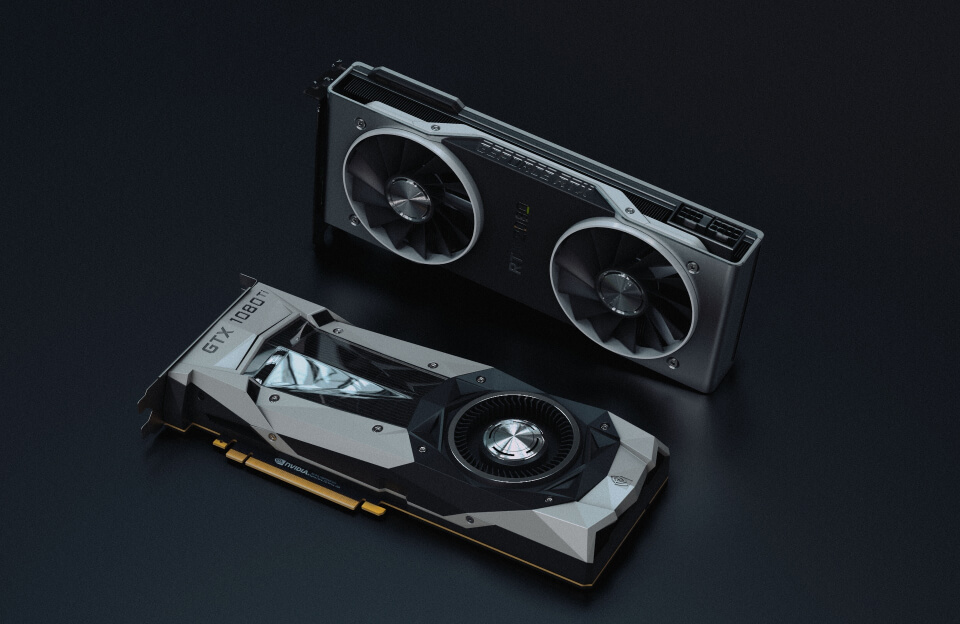
While the CPU keeps the ship steady, the GPU is the engine that drives visual fidelity. Choosing the right graphics card can elevate gaming resolution, frame rate, and shader quality, making it a focal point for any Gaming PC Upgrade. In 2024, Nvidia’s RTX 4060 and RTX 4070 Ti offer impressive performance gains over the previous generation, especially with DLSS 3.0 upscaling that can boost frame rates by 20–30%. AMD counters with the Radeon RX 7800 XT, boasting competitive rasterization power and efficient power usage. Both card families support ray tracing, though Nvidia still leads in feature support and driver stability. For gamers working in 4K, a high‑end GPU like the RTX 4080 or RTX 4090 is essential, whereas 1080p or 1440p players can satisfy with mid‑range models.
One of the biggest advantages of a Gaming PC Upgrade lies in the ability to leverage GPU acceleration for non‑gaming workloads. Professionals who run video editing, 3D rendering, or AI research tools can see significant productivity boosts. Additionally, modern GPUs include VRAM upgrades; a 6 GB model may suffice for many titles, but a 12 GB variant can future‑proof you against upcoming games that demand higher texture resolutions. Always double‑check the power supply requirements before purchasing a new card, as high‑end GPUs can consume up to 350 W.
When making a purchase, pay attention to the card’s form factor. A Gaming PC Upgrade that fits an ATX chassis may still be too large for a mini‑ITX case, so measure your case’s clearance. Many newer GPUs come with cooler systems that have two or three fan blades, which influence noise levels and heat output. For gamers that live in smaller apartments or prefer quieter environments, consider cards with a single‑fan design or custom coolers that allow fans to run at lower speeds while still maintaining adequate airflow.
Gaming PC Upgrade: Effective Cooling Strategies
Heat is the enemy of performance. A Gaming PC Upgrade without proper cooling can lead to thermal throttling, where the CPU or GPU reduces speed to stay within safe temperature limits. Effective cooling solutions are therefore essential to achieve consistent frame rates. The most common methods involve a combination of air cooling, liquid cooling, and case airflow optimization.
Air coolers, especially those manufactured by Noctua or be quiet!, provide reliable performance for mainstream gamers. They are inexpensive, easy to install, and have minimal noise footprints. On the other hand, all‑in‑one (AIO) liquid coolers like those from Corsair or NZXT offer lower temperatures and quieter fan profiles for overclocked CPUs. When you upgrade your CPU, pairing it with a competent cooler can prevent sudden stalls during extended play sessions.
Case airflow should be treated as a separate layer. Positioning intake fans at the front and exhaust fans at the rear or top ensures that hot air is expelled efficiently. A Gaming PC Upgrade can benefit from a dual‑fan or triple‑fan setup, as well as the addition of dust‑filtering grills. If you’re using a liquid cooler, add a dedicated radiator fan to keep the coolant at optimal levels. Monitoring tools—such as HWiNFO—can alert you to temperature spikes in real time, enabling you to tweak fan curves proactively.
Gaming PC Upgrade: Building a Budget‑Friendly System
Dreaming of lightning‑fast frame rates doesn’t always mean breaking the bank. A thoughtful Gaming PC Upgrade can be both powerful and affordable if you prioritize components correctly. Start by assessing your most critical use case: are you a casual player, a competitive esports racer, or an indie developer? Once you have that focus, allocate budget slices accordingly.
One major saving strategy is to purchase a used GPU from a reputable seller or auction site. Verified pre‑owned options from sites like eBay often come with a 6‑month warranty when bought through the platform’s guarantee. Be wary of any device that has a visibly damaged power connector or excessive fan noise, as these are red flags. Pair the used card with a new CPU and a matching motherboard, ensuring the power supply is up to spec. Upgrading the RAM to 16 GB or 32 GB can also provide a noticeable boost, especially for titles that strain memory bandwidth.
Another cost‑effective approach involves leveraging seasonal sales. Retailers frequently offer discounts on GPUs, CPUs, and even full kits during summer or holiday sales events. Sign up for newsletters from Nvidia or AMD to receive notifications about price drops. For users who are comfortable building from scratch, a “DIY” bundle—combining an off‑the‑shelf case, power supply, and motherboard—often yields better value than pre‑assembled towers. Remember, even a modest power supply upgrade can improve the reliability of your Gaming PC Upgrade over time.
Conclusion: Take Your Gaming PC Upgrade to the Next Level
In summary, a well‑planned Gaming PC Upgrade elevates not only your visual experience but also enhances overall system stability and future‑proofing. By selecting the right CPU and GPU, implementing robust cooling, and managing budget wisely, you can transform a standard desktop into a high‑performance machine that stands the test of time.
Ready to start your upgrade journey? Take the first step by assessing your current hardware, exploring reputable vendor sites, and setting a clear budget. Investing in quality components, like an efficient cooler and ample VRAM, will deliver consistent results for years to come. Don’t wait—upgrade today and unlock the full potential of your gaming adventures.